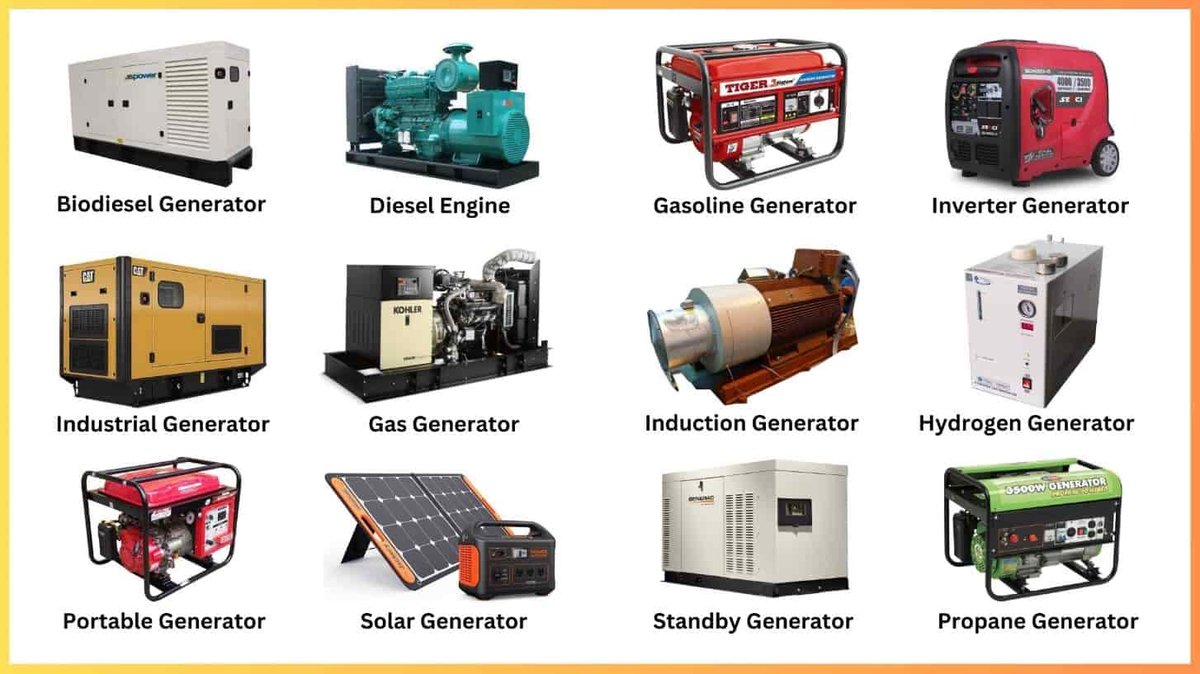
Imagine a sudden blackout. Your lights flicker, the refrigerator hums to a halt, and your phone battery dwindles. Or perhaps you’re on a remote construction site, miles from the nearest power grid, needing to run heavy machinery. In these moments, understanding the types of generators & their uses isn't just helpful; it's absolutely critical.
Generators are the unsung heroes of modern life, bridging the gap between an active power grid and the crucial need for electricity. They convert mechanical energy into electrical power, working on the principle of electromagnetic induction—a fuel-powered engine spins a rotor past magnets or coils, creating a steady electrical current. From keeping your essential appliances running during an outage to powering an entire industrial complex, there’s a generator designed for every conceivable power need.
At a glance: Your Generator Playbook
- Standby Generators are permanent, automatic systems, ideal for whole-home backup.
- Portable Generators offer versatile power on the go for camping, tools, or small emergencies.
- Inverter Generators provide clean power for sensitive electronics, quieter and more fuel-efficient.
- Industrial Generators are robust powerhouses for heavy-duty commercial and construction applications.
- Fuel Options range from gasoline and diesel to natural gas, propane, solar, and even hydrogen, each with pros and cons regarding cost, emissions, and reliability.
- Choosing the Right Generator depends on your specific power needs, budget, desired run time, and environmental considerations.
- Safety is Paramount: Never operate generators indoors due to carbon monoxide risks; professional installation is often essential.
The Core Idea: What Makes a Generator Tick?
At its heart, every generator is a marvel of engineering designed to generate electricity when and where you need it most. Picture a small power plant in a box. It starts with an engine, fueled by gasoline, diesel, natural gas, or propane, which drives a rotating component. This rotation occurs within the alternator, where coils of wire move through a magnetic field, inducing an electrical current.
A fuel system ensures the engine gets the power it needs, while a voltage regulator maintains a consistent power output, preventing surges or drops that could damage your devices. Finally, a control panel acts as the brain, allowing you to monitor and manage the generator's operation. This intricate dance of components delivers the reliable electricity that keeps our world moving, whether it's powering a single lamp or an entire factory.
Decoding Generator Types: Finding Your Perfect Power Partner
When it comes to generators, a "one size fits all" approach simply doesn't exist. Your choice will depend heavily on what you need to power, where, and how often. Let's break down the main categories to help you navigate the options.
By Installation & Mobility
The first major distinction lies in how generators are installed and whether they're meant to stay put or move with you.
Standby Generators: Your Automatic Guardian
These are the workhorses of home and small business backup, designed to kick in automatically when the main power grid fails. Permanently installed outside your property, much like an AC unit, they connect directly to your home's electrical system via an automatic transfer switch (ATS).
When an outage hits, the ATS senses the disruption, signals the generator to start, and within seconds, seamlessly transfers your home's electrical load. Running primarily on natural gas or propane, standby generators can power an entire house, from lights and HVAC to essential appliances. While a significant upfront investment, they offer unparalleled peace of mind and convenience.
Portable Generators: Power On the Go
Think versatility and mobility. Portable generators are compact units, typically gasoline-powered, designed for easy transport. With outputs ranging from 1,000 to 10,000 watts, they're perfect for a diverse range of uses:
- Camping and RVs: Keeping creature comforts alive in the wilderness.
- Tailgating and Outdoor Events: Powering speakers, griddles, and lights.
- Construction Sites: Running power tools where grid access is limited.
- Small Emergency Backup: Charging devices, running a few lights, or keeping a refrigerator cold during short outages.
They're a more affordable entry point into generator ownership, but remember, they require manual setup and refueling. If you're looking for more options, you might want to check out our guide on portable generator safety and usage.
Inverter Generators: The Smart Choice for Sensitive Tech
A subset of portable generators, inverter generators represent a leap forward in power quality and efficiency. Unlike conventional generators that produce raw AC power, inverters convert AC to DC and then back to clean AC power. Why does this matter? This process creates a stable sine wave, crucial for sensitive electronics like laptops, smartphones, and medical devices, preventing potential damage from power fluctuations.
Beyond clean power, inverters are known for their:
- Quiet Operation: They adjust engine speed based on demand, drastically reducing noise.
- Fuel Efficiency: Lower engine speeds mean less fuel consumption.
- Portability: Often lighter and more compact than traditional portables.
Available in various sizes, from small camping units to larger models capable of powering an entire home with parallel kits, inverter generators are often considered the premium choice for those who value quiet, efficiency, and clean power. To truly understand the benefits, it's worth seeing how inverter generators compare to other portable options.
Induction Generators: The Industrial Workhorse (Not for Homes)
Induction generators create electromagnetic fields by turning an internal rotor. They require significant mechanical energy to start and are often found in large-scale renewable energy applications like wind turbines and mini hydro plants. Their key advantages include small size, easy maintenance, and the ability to produce power at varying speeds.
However, this variance in speed leads to unstable wattage, making them entirely unsuitable for direct home use where consistent power is essential for appliances. They're specialized machines for specific industrial energy generation contexts, not for personal backup.
Industrial Generators: Heavy-Duty Power for Big Jobs
When you need serious power that can withstand the harshest conditions, industrial generators step up. These are large, robust machines, often capable of producing up to 2 megawatts—enough to power a small town. Designed for durability and continuous operation, they are typically transported by crane or forklift and are a significant investment.
Industrial generators are commonly rented for temporary needs at large-scale operations such as:
- Chemical plants
- Oil well sites
- Large construction projects
- Hospitals and data centers
They are built to perform under extreme loads and provide reliable, uninterrupted power for critical infrastructure.
By Fuel Type: What Powers Your Generator?
The fuel a generator uses profoundly impacts its cost, environmental footprint, performance, and overall convenience.
Gasoline Generators: The Budget-Friendly Sprinter
Gasoline generators are often the most affordable upfront option. They are widely available, and gasoline is easily accessible (though this can be a problem during extended power outages if gas pumps lose electricity).
- Pros: Low initial cost, easy to find fuel.
- Cons: Higher long-term fuel costs compared to diesel, fuel degrades over time, flammable, can be unreliable during widespread outages.
- Best For: Short-term projects, recreational use, or emergency backup on a tight budget.
Natural Gas Generators: The Pipeline-Connected Steady Stream
Connected directly to a home's or business's natural gas line, these generators eliminate the need for refueling. This makes them an excellent choice for standby systems.
- Pros: Unlimited run time (as long as gas supply is uninterrupted), lower emissions than gasoline or diesel, no fuel storage required.
- Cons: Higher installation costs due to gas line connection, potential for supply interruption during major natural disasters affecting gas infrastructure.
- Best For: Permanent standby power solutions, especially where environmental considerations are a factor.
Diesel Generators: The Long-Haul Powerhouse
Diesel generators are renowned for their durability, fuel efficiency, and long lifespan. While more expensive initially, the lower cost of diesel fuel often makes them more cost-effective for long-term or heavy-duty use.
- Pros: Excellent fuel efficiency, robust and durable, ideal for long-duration operation, performs well in cold climates (with winter diesel).
- Cons: Higher upfront cost, diesel fuel can gel in extreme cold without additives, accessibility issues during outages if pumps are down, higher emissions than natural gas.
- Best For: Industrial applications, commercial standby power, and long-term projects in various climates.
Biodiesel & Emulsified Diesel Generators: Greener Power Choices
These are variations of diesel generators with an eye toward sustainability.
- Biodiesel Generators: Run on a mix of diesel and renewable components like vegetable oil or animal fat. They reduce reliance on nonrenewable fuels and lower emissions.
- Emulsified Diesel Generators: Utilize a mixture of diesel and water, further reducing emissions and offering long-term cost-effectiveness.
- Pros: Environmentally friendlier than traditional diesel.
- Cons: Similar outage-related fuel accessibility issues as other liquid fuels; specialized fuel mixtures might be less readily available.
- Best For: Organizations or individuals prioritizing environmental impact alongside reliable diesel-like performance.
Propane Generators: Reliable Cold-Weather Performer
Propane generators are highly reliable because propane is widely available, easy to store (in tanks), and performs exceptionally well in cold weather without gelling issues.
- Pros: Excellent cold-weather performance, readily available fuel even during outages, long shelf life of stored fuel.
- Cons: Propane burns about three times faster than diesel, leading to higher fuel costs for extended use, requires dedicated storage tanks, highly flammable.
- Best For: Standby applications in cold climates, remote locations where other fuels are scarce, and situations requiring reliable, long-term fuel storage.
Solar Generators: Harnessing the Sun's Energy
More accurately described as portable power stations charged by solar panels, these systems convert sunlight into electricity, which is then stored in integrated batteries. They are often discussed when people consider eco-friendly power solutions.
- Pros: Eco-friendly (zero emissions), quiet operation, safe for indoor use, no fuel costs.
- Cons: Power output depends entirely on sunlight, making them unreliable for nighttime or extended cloudy periods; limited power output compared to fuel-powered generators; high initial cost; lengthy recharge times.
- Best For: Small-scale needs, camping, silent backup for sensitive electronics, or as a supplementary power source.
Hydrogen Generators: The Future of Clean Power
Hydrogen generators use electrolysis to convert water into hydrogen gas, which is then burned to produce electricity. While currently expensive and less common, they represent a cutting edge in clean energy.
- Pros: Extremely eco-friendly (produces only water vapor as a byproduct), very sturdy, high energy density (more energy per pound than other fuels), reliable emergency power.
- Cons: High initial cost, hydrogen fueling infrastructure is still nascent and difficult to find, complex technology.
- Best For: Early adopters, specialized industrial applications, and those investing in future clean energy solutions.
Beyond the Basics: Key Considerations When Choosing a Generator
With such a diverse array of options, making the right choice can feel daunting. Here’s a framework to help you narrow down your search and select the generator that truly fits your needs.
What Will You Power? (Wattage Matters)
This is your starting point. Make a list of all the appliances and devices you intend to power. Note their starting wattage (surge wattage) and running wattage.
- Small Needs: A few lights, phone chargers, a fan (1,000-3,000 watts).
- Moderate Needs: Refrigerator, microwave, TV, some lights (3,000-7,000 watts).
- Whole-Home Essentials: HVAC, well pump, major appliances (7,000-20,000+ watts).
Undersizing your generator will lead to frustrating power limitations, while oversizing can mean unnecessary costs. Many resources can help you calculate your exact wattage requirements.
How Often Will You Need It?
Are you preparing for occasional short-term outages, or do you need a continuous power source for off-grid living or critical business operations?
- Occasional Emergency: Portable or smaller standby generators.
- Frequent or Extended Outages: Larger standby generators, diesel generators.
- Continuous/Off-Grid: Industrial generators, large diesel, or complex solar/battery systems.
Where Will You Use It?
The operating environment significantly influences your choice.
- Residential Backup: Standby (natural gas/propane) or portable (gasoline/inverter).
- Remote Work Sites: Portable, diesel, or industrial generators.
- Camping/Quiet Areas: Inverter generators are ideal due to low noise.
- Urban Areas: Noise restrictions might push you towards quieter inverter or natural gas options.
Budget & Long-Term Costs
Initial purchase price is just one piece of the puzzle. Consider the total cost of ownership:
- Upfront Cost: Portable generators are cheapest; standby and industrial generators are most expensive.
- Fuel Costs: Propane and gasoline can be more expensive per hour than diesel or natural gas over the long run.
- Installation: Standby generators require professional installation, which adds to the initial investment.
- Maintenance: All generators require regular maintenance. Factor in oil changes, filter replacements, and professional check-ups. Regular generator maintenance is crucial for longevity and reliability.
Environmental Impact
If reducing your carbon footprint is a priority, consider:
- Lowest Emissions: Solar, hydrogen, natural gas, biodiesel/emulsified diesel.
- Higher Emissions: Gasoline, traditional diesel.
Real-World Applications: Where Generators Shine
Generators aren't just for emergencies; they enable a wide array of activities and ensure critical services remain uninterrupted.
Emergency Home Backup: Keeping the Lights On
This is perhaps the most common reason people invest in generators. A power outage can disrupt everything: heating/cooling, refrigeration, communication, and security systems. A well-chosen generator keeps your home functioning, safeguarding comfort, food, and connectivity during unexpected blackouts. For critical scenarios like hospitals or nursing homes, this backup is literally a matter of life and death.
Construction Sites: Powering Progress
Remote construction sites often lack access to grid power. Generators provide the essential electricity needed to run power tools, lighting, welding equipment, and site offices, keeping projects on schedule and workers productive.
Outdoor Events & Recreation: Fun Without Limits
From music festivals and sporting events to family reunions and RV camping trips, generators bring power to the party. They enable sound systems, lighting, food preparation, and entertainment in locations far from traditional power outlets.
Remote Locations: Off-Grid Independence
For cabins, farms, or research stations far from utility lines, generators are the primary power source. They provide the independence needed to live and work off-grid, often paired with solar or wind systems for a hybrid approach.
Business Continuity: Staying Operational
For many businesses, even a short power outage can mean significant financial losses, data corruption, or missed deadlines. Generators ensure business continuity, keeping servers, cash registers, lighting, and communication systems online, protecting revenue and reputation.
The Unsung Benefits: Why Every Home & Business Needs One
Beyond simply providing electricity, generators offer a suite of advantages that enhance safety, convenience, and overall quality of life.
Enhanced Safety & Security
During an outage, generators keep security systems, lights, and communication devices operational. This deters crime and allows you to stay informed and connected, crucial in adverse weather or emergency situations. For those with medical equipment reliant on electricity, a generator isn't just convenient; it's a lifesaver.
Uninterrupted Comfort & Productivity
Imagine a summer blackout without AC, or a winter storm without heat. Generators ensure your HVAC systems keep running, your refrigerator stays cold, and you can continue to work or study without interruption. This maintains comfort, prevents food spoilage, and keeps your family's routine as normal as possible.
Peace of Mind
Knowing you have a reliable backup power source offers immense peace of mind. You don't have to worry about the next storm or grid failure; you're prepared. This sense of security is invaluable for families, especially those with young children, elderly members, or individuals with special medical needs.
Added Property Value
A permanently installed standby generator is often seen as a significant upgrade to a home, increasing its market value and appeal, particularly in areas prone to power outages. It's an investment in both present comfort and future equity. To discover even more options for your home or business, be sure to explore Sams generators and their comprehensive range of power solutions.
Crucial Safety & Installation Tips: Don't Cut Corners!
Operating a generator safely is as important as choosing the right one. Mishandling can lead to severe hazards, including carbon monoxide poisoning, electrical fires, and electrocution.
Never Indoors: The Carbon Monoxide Threat
This is the most critical rule. Generators produce carbon monoxide (CO), an odorless, colorless, and deadly gas. Operating a generator in an enclosed space—even a garage with the door open—can quickly lead to dangerous levels of CO. Always run generators outdoors, far from windows, doors, and vents that could allow fumes to enter your home. Install carbon monoxide detectors in your home for added protection.
Proper Placement & Ventilation
- Distance: Place generators at least 15-20 feet away from your home.
- Direction: Point the exhaust away from any buildings or occupied areas.
- Stability: Ensure the generator is on a level, dry surface, protected from rain and snow (using a canopy, not an enclosure).
Automatic Transfer Switches: The Smart Connection
For standby generators, an automatic transfer switch (ATS) is non-negotiable. It safely disconnects your home from the utility grid before connecting to the generator, preventing "backfeeding" electricity into power lines, which can injure or kill utility workers. For portable generators, use heavy-duty, outdoor-rated extension cords and never plug the generator directly into a wall outlet.
Regular Maintenance: Keeping It Reliable
Just like your car, a generator needs routine care.
- Check Oil Levels: Before each use and regularly during extended operation.
- Inspect Fuel Lines: Look for cracks or leaks.
- Clean/Replace Air Filters: Clogged filters reduce efficiency.
- Test Run: Start your generator monthly to ensure it's in good working order.
Refer to your owner's manual for specific maintenance schedules.
Professional Installation: It's Non-Negotiable
For standby generators, professional installation by a licensed electrician and plumber (for natural gas connections) is absolutely essential. They will ensure proper grounding, ventilation, adherence to local codes, and the correct setup of your automatic transfer switch, guaranteeing both safety and reliable performance. Do not attempt to install a standby generator yourself.
Frequently Asked Questions About Generators
Navigating the world of generators often brings up common questions. Here are some quick answers to clarify a few points.
Can I run a generator in the rain?
No, you should never expose a generator directly to rain or wet conditions unless it is specifically designed for such use and has appropriate weather protection. Water and electricity are a dangerous combination. Use a generator tent or canopy to shield it from precipitation while ensuring ample ventilation.
How much does a generator cost?
The cost varies widely. Small portable gasoline generators can start from a few hundred dollars. Inverter generators range from $500 to $4,000+. Standby generators, including professional installation, can cost anywhere from $5,000 to $20,000 or more, depending on size and features.
What's the difference between a portable and an inverter generator?
While inverter generators are a type of portable generator, the key difference lies in the quality of power and efficiency. Standard portable generators produce "raw" AC power, which can have fluctuations. Inverter generators produce "clean" or "stable" power, making them safer for sensitive electronics. Inverters are also generally quieter and more fuel-efficient because they can adjust engine speed to match demand.
How long can a generator run continuously?
This depends on the generator type and fuel tank size. Portable gasoline generators typically run for 6-12 hours on a single tank. Diesel and larger propane generators can run for 24 hours or more. Natural gas standby generators can run indefinitely as long as the gas supply is uninterrupted. Always consult your generator's manual for specific run times and ensure you allow for cool-down periods to prevent overheating and prolong its lifespan.
Making Your Power Play: Next Steps
Understanding the types of generators & their uses is the first step toward securing your power independence. But knowledge without action is just trivia. To move forward with confidence, here’s how to proceed:
- Assess Your Needs: Review your list of essential appliances, your desired run time, and your budget. This forms the blueprint for your generator search.
- Research & Compare: Use the insights from this guide to narrow down your options by type and fuel. Read reviews, compare specifications, and consider the total cost of ownership.
- Consult an Expert: For significant investments like standby or industrial generators, always consult with a licensed electrician or a reputable generator dealer. They can provide accurate sizing recommendations, installation quotes, and ensure compliance with all local codes and safety standards.
With the right generator in place, you’ll be prepared for anything, ensuring peace of mind and an uninterrupted supply of the electricity that keeps your world turning.